

How to Market a Hotel in Gurgaon to Corporate Travellers
- 23 hours ago
- 9 min read

Gurgaon is built for business travel. The city draws teams visiting Cyber City, Golf Course Road, Udyog Vihar, Sohna Road, Manesar, and the wider NCR for client meetings, offsites, training sessions, conferences, and project work. That creates strong demand, but it also creates tough competition.
A corporate guest does not choose a hotel the way a holiday guest does. They care about speed, certainty, comfort, location, safety, billing, cancellation terms, and whether the hotel makes work easier. Their company may care even more about rates, reporting, GST invoices, and policy compliance.
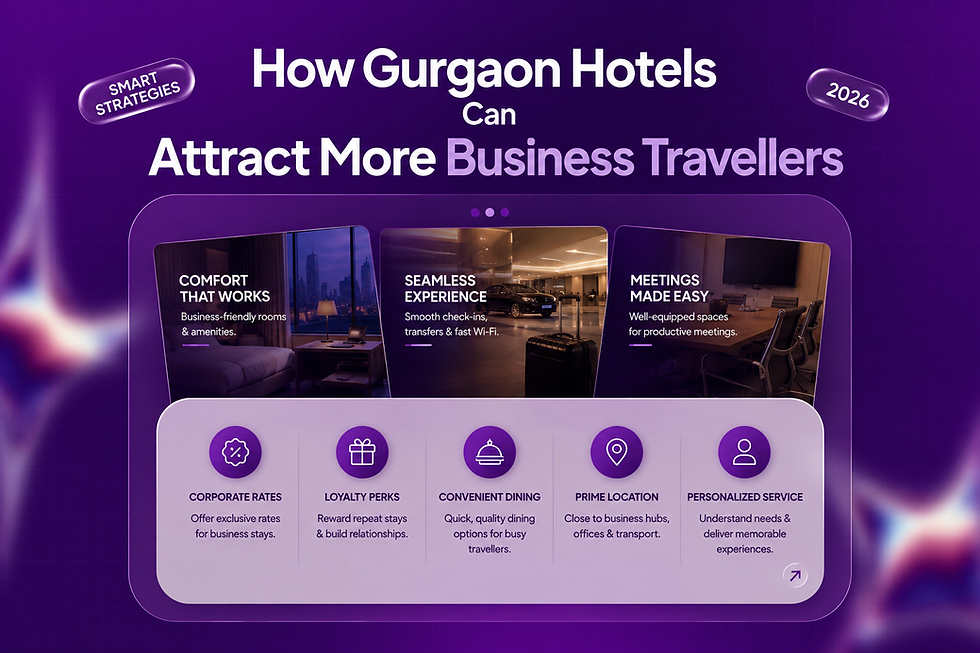
To win this segment, a Gurgaon hotel needs more than a good room and a few weekday discounts. It needs a clear corporate travel programme, a website that answers business questions, direct outreach to travel managers, and a system for turning one stay into repeat bookings.
Understand what corporate travellers really need
Corporate travel is not one audience. A CXO visiting for a board meeting, a consultant staying for three weeks, a sales team attending a trade event, and a trainer conducting a workshop all have different needs. The better the hotel understands these patterns, the easier it becomes to sell the right stay.
Start by grouping guests by purpose of travel.
Common corporate traveller profiles in Gurgaon include:
Short-stay executives
Usually staying one or two nights. They value location, fast check-in, quiet rooms, breakfast, airport transfers, and flexible checkout.
Project teams
Often stay for a week or longer. They look for laundry, stable Wi-Fi, meal plans, parking, workspace, and easy billing.
Event and training guests
Need rooms near a venue, meeting facilities, group rates, tea and coffee breaks, and quick coordination.
International business guests
Often care about airport access, foreign exchange support nearby, familiar dining options, safety, concierge help, and clear communication.
Employees on relocation or onboarding
May need longer stays, kitchenette access, transport help, and predictable monthly rates.
Booking behaviour also varies. Some corporate travellers book directly, especially for small companies and last-minute trips. Others book through travel management companies, admin teams, HR teams, event planners, or online corporate booking tools.
That means your marketing should speak to both the guest and the decision-maker.
A guest wants to know:
Is the hotel close to my meeting location?
Will the Wi-Fi work well enough for video calls?
Can I check in late after a delayed flight?
Is breakfast early enough?
Will I get a proper invoice?
A travel manager wants to know:
Are negotiated rates available?
Can the hotel honour the same rate across multiple dates?
Are GST invoices and company billing available?
What is the cancellation policy?
Can the hotel handle repeat stays and group bookings?
The hotels that win corporate business make these answers easy to find.
Build corporate packages that are clear and easy to buy
Corporate travellers like flexibility, but companies like control. A strong package should balance both. Avoid vague offers such as “special corporate rates available”. Give the buyer enough detail to understand the value before they contact your sales team.
A useful corporate package can include:
Package element | What to offer | Why it matters |
Room rate | Fixed weekday rate or volume-based pricing | Helps companies plan travel costs |
Breakfast | Early breakfast or packed breakfast option | Supports early meetings and airport runs |
Wi-Fi | High-speed access included in the rate | Essential for calls, emails, and file sharing |
Transfers | Paid or bundled airport and office transfers | Reduces friction for out-of-city guests |
Laundry | Included pieces per day for long stays | Helps project teams and extended-stay guests |
Meals | Set dinner, meal credit, or corporate buffet | Makes approvals easier for employers |
Billing | GST invoice, company billing, and payment links | Supports finance and compliance teams |
Flexibility | Clear cancellation and date-change rules | Reduces stress when meetings shift |
Create separate rate plans for different needs rather than one generic corporate offer. For example:
A one-night executive plan with breakfast and airport transfer
A long-stay plan with laundry and meal inclusions
A group stay plan for training or conference attendees
A day-use room plan for travellers between meetings
A meeting-plus-room plan for small business events
Negotiated rate programmes work best when they are simple. Define the minimum room nights needed, the rate validity period, blackout dates if any, included benefits, payment terms, and the booking process.
For larger accounts, offer a quarterly review. This shows travel managers that the hotel treats the relationship seriously. Share room nights booked, average rate, cancellations, peak travel dates, and guest feedback. These reviews often reveal chances to increase future bookings.
Also create a one-page corporate rate sheet. It should include room types, inclusions, meeting space capacity, distance from key business hubs, billing options, and the sales contact. Keep it clean and current. Travel managers often forward such documents internally.
Make your website work for corporate bookings
Many hotels lose corporate guests before the first enquiry because their website is built only for leisure travellers. A business guest should not have to search for basic information.
Create a dedicated corporate travel page on the hotel website. The page should be easy to find from the main menu and should answer practical questions quickly.
Include these details:
Room categories that suit solo travellers, senior executives, and long-stay guests
Work-friendly features such as desk space, lighting, charging points, and sound control
Wi-Fi details, including whether access is included
Breakfast timings and in-room dining hours
Meeting room sizes and seating styles
Distance from business districts and major roads
Airport transfer options
Parking availability
Laundry service
GST invoice and billing process
Cancellation and no-show policy
Early check-in and late checkout options
Contact details for corporate sales
Location content matters in Gurgaon. A traveller searching for a hotel near Cyber Hub may not consider a property that only says “centrally located”. Be specific. Mention nearby business hubs, metro stations, industrial areas, event venues, hospitals, and corporate parks where relevant.
Examples of useful location lines include:
“Close to Cyber City and DLF Phase 2”
“Convenient for offices on Golf Course Road”
“Easy access to Udyog Vihar and NH48”
“Suitable for guests visiting Manesar and Sohna Road”
The booking engine should also support corporate needs. Add room descriptions that explain who each room suits. If possible, include rate plan names that make sense, such as “Business Traveller Rate” or “Long Stay Corporate Plan”. Make policies visible before payment.
Add a short enquiry form for corporate rates. Keep it simple. Ask for:
Company name
Contact person
Email and phone number
Expected room nights per month
Preferred dates or travel pattern
Need for meeting space or meals
Do not make the form too long. The goal is to start a conversation, not collect every detail in one step.
A good corporate page also builds trust. Use testimonials from business guests, logos only if permission has been given, and short examples of corporate stay support. For instance, mention that the hotel can handle group check-ins, packed breakfast requests, or consolidated billing.
Reach decision-makers through B2B channels
Corporate bookings often come from people who never stay at the hotel. Admin heads, HR teams, procurement managers, executive assistants, event planners, and travel management companies may all influence the booking.
LinkedIn is one of the most useful channels for reaching them. The goal is not to post generic hotel content. The goal is to show that the hotel understands business travel in Gurgaon.
Types of LinkedIn posts that can work well include:
A short guide to choosing a hotel near Cyber City or Golf Course Road
A post about what long-stay corporate guests should check before booking
Photos of meeting rooms, workspaces, breakfast setups, or business lunch options
A case-style post about hosting a training group, without naming the client unless approved
A seasonal note for companies planning annual meets, reviews, or onboarding weeks
For direct outreach, keep messages short and relevant. Avoid sending a rate card in the first message unless there is clear interest. A better approach is to offer help.
For example:
“We support corporate stays near Golf Course Road and Cyber City, including GST billing, breakfast, Wi-Fi, transfers, and meeting rooms. If your team regularly travels to Gurgaon, I would be happy to share a concise corporate rate proposal.”
Build a target list of companies and partners. Focus on:
Companies with offices within a practical travel radius
Travel management companies serving NCR clients
Event planners handling conferences and training sessions
Coworking spaces that host visiting teams
Hospitals, universities, and consulting firms with frequent visitors
Industrial and manufacturing companies with guests visiting Manesar or Udyog Vihar
B2B travel marketplaces and corporate booking platforms can also help, especially when they connect hotels with approved company travel programmes. The key is to keep rates, policies, and inventory accurate. Corporate buyers lose trust quickly when the quoted rate changes too often.
Local partnerships can bring steady business. Build relationships with nearby companies, convention spaces, wedding and banquet venues that also host corporate events, training institutes, and relocation consultants. Offer them a clear referral process and a named contact at the hotel.
Event planners are especially valuable. They need reliable room blocks, fast responses, clear meal pricing, and a hotel team that can handle last-minute changes. If your hotel can make an event planner’s job easier, repeat business becomes much more likely.
Use guest proof, email, and data to grow repeat stays
Corporate marketing does not end when the booking is confirmed. The best revenue often comes from repeat accounts, extended stays, and referrals inside the same company.
Start with reviews. Business travellers trust practical feedback. Encourage corporate guests to mention specific details in their reviews, such as Wi-Fi, breakfast, location, check-in speed, room comfort, meeting rooms, or billing support.
Do not pressure guests or script reviews. A simple post-stay message works well.
You can ask:
Was the room suitable for work?
Was the Wi-Fi reliable?
Was the location convenient for your office visit?
Did the billing process meet your company’s needs?
Would you recommend us for future business stays?
Use positive reviews across your website, sales decks, email campaigns, and corporate proposals. A testimonial from a project manager who stayed for 15 nights can be more persuasive than a polished brochure.
Email marketing is also useful for nurturing corporate accounts. Segment your database so corporate contacts do not receive only leisure offers. Send emails that help them plan business travel.
Good email ideas include:
Monthly corporate rate availability
Long-stay offers for project teams
Meeting room packages for small teams
Festival and peak-season booking reminders
Updates on new amenities, dining hours, or transport support
Special terms for repeat accounts
Keep emails short and useful. A travel manager is more likely to respond to a clear offer than a long hotel newsletter.
Also set reminders for account follow-ups. If a company booked five rooms last quarter and has gone quiet, reach out with a helpful note. Ask whether their Gurgaon travel needs have changed. Offer a short rate review or a custom plan for the next quarter.
To measure success, track corporate performance separately from leisure and OTA bookings. At a minimum, review these numbers every month:
Metric | What it tells you |
Corporate room nights | Total volume from business accounts |
Average daily rate | Whether corporate pricing is profitable |
Repeat booking rate | Strength of account relationships |
Direct booking share | How much business avoids high commission channels |
Length of stay | Demand from projects and long-stay guests |
Enquiry conversion rate | Sales team response and proposal quality |
Revenue by company | Which accounts deserve more attention |
Cancellation rate | Whether policies and travel patterns need review |
Meeting room attachment | How often stays turn into event revenue |
Look beyond revenue alone. A company with lower rates but steady weekday stays may be valuable because it fills predictable demand. A smaller account may become important if it brings senior leaders or event bookings.
Set clear goals for the corporate segment. For example, aim to grow direct corporate enquiries, increase repeat room nights, improve weekday occupancy, or add a fixed number of negotiated accounts in a quarter. The targets should match the hotel’s size, location, and service style.
FAQ
How can a Gurgaon hotel attract more corporate travellers?
Start by building a clear corporate stay offer. Include business-friendly amenities, location benefits, GST billing, flexible policies, and a direct contact for company bookings. Then promote it through your website, LinkedIn, email, local partnerships, and travel managers.
What should be included in a corporate hotel package?
A strong package usually includes room rate benefits, breakfast, high-speed Wi-Fi, laundry options, airport or office transfers, meal plans, GST invoices, and clear cancellation terms. Long-stay and group packages should have separate pricing.
How do hotels reach corporate travel managers?
Hotels can reach travel managers through LinkedIn, B2B email outreach, travel management companies, local business networks, event planners, and direct visits to nearby offices. The message should focus on ease, reliability, billing, and repeat-stay support.
Are reviews useful for corporate hotel marketing?
Yes. Corporate guests look for proof that the hotel can support real work trips. Reviews that mention Wi-Fi, location, breakfast, quiet rooms, meeting spaces, and billing can help future guests and travel managers feel more confident.
How should a hotel measure corporate booking success?
Track corporate room nights, average rate, repeat bookings, direct booking share, enquiry conversion, revenue by account, and meeting room usage. Review these numbers monthly so the sales team can focus on the most valuable accounts.
Make business travel easier, and the bookings will follow
Corporate travellers choose hotels that reduce friction. They want a smooth arrival, a quiet room, reliable Wi-Fi, good food, clear billing, and a location that saves time. Travel managers want fair rates, dependable service, and quick answers.
A Gurgaon hotel that can deliver both will stand out.
The most effective approach is simple. Understand the guest profile, create packages that solve real business needs, make the website clear, reach decision-makers through the right channels, build local partnerships, and keep nurturing accounts after the first stay.
When the hotel becomes easy to book, easy to approve, and easy to return to, corporate travel becomes a steady source of revenue rather than a one-time opportunity.


Comments