


Hotel SEO Services in India: Can SEO Really Generate Direct Bookings?
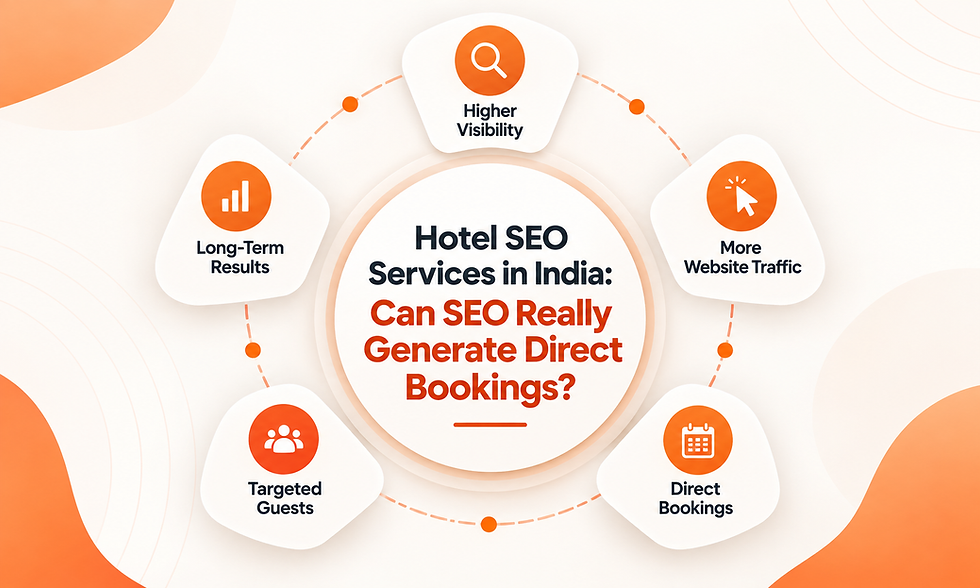
Hotels do not need more random website traffic. They need travellers who are already searching for a stay in their city, near their landmark, for their dates, and with a real chance of booking directly.
That is where hotel SEO services in India become valuable. Good SEO helps a hotel appear when guests search on Google, Google Maps, and organic results for rooms, locations, amenities, and travel intent. It can reduce overdependence on OTAs over time, support brand trust, and bring qualified visitors to the hotel website.
Can SEO really generate direct hotel bookings? Yes, it can contribute meaningfully. But SEO does not work in isolation. Bookings also depend on pricing, room availability, the quality of the website, the booking engine, reviews, offers, and how easy it is for a guest to complete the reservation.
A strong SEO plan brings the right people to the hotel’s digital front door. The website and booking experience must then convert them.
Why SEO matters for hotels in India
Hotel discovery has changed. Guests may still use OTAs for comparison, but many also search Google before making a final decision. They look for hotel names, nearby stays, pet-friendly rooms, wedding venues, business hotels, resort packages, and destination guides.
Search behaviour can include queries like:
Hotels near Jaipur railway station
Best beach resort in North Goa
Family hotel in Manali with parking
Boutique hotel in Fort Kochi
Luxury hotel in Udaipur for couples
Budget rooms near Mumbai airport
When a hotel appears for these searches, it earns visibility at an important stage of the guest journey. That visibility can lead to calls, direction requests, enquiry forms, WhatsApp messages, and bookings through the hotel’s own website.
This is why SEO for hotels is different from generic SEO. A hotel is tied to location, room inventory, guest experience, and seasonality. The strategy needs to connect search intent with real booking opportunities.
A good hotel SEO plan usually focuses on three goals:
Increase qualified organic traffic
Bring in visitors who are actively searching for accommodation, not broad traffic that will never book.
Improve local discovery
Help the hotel appear in local SEO results, Google Maps, and nearby searches.
Support website conversion
Make it easier for visitors to check rooms, compare offers, and complete a booking.
An experienced hotel SEO company understands that rankings are only one part of the work. The real goal is better visibility that can support revenue.
What hotel SEO includes
Hotel SEO is a mix of website improvements, local search work, content planning, and technical fixes. It should match how guests actually search.
Hotel website SEO
Hotel website SEO starts with the pages guests use before they book. A hotel website should clearly show location, rooms, amenities, tariffs or offers where suitable, photos, cancellation details, contact options, and a smooth path to the booking engine.
Important website elements include:
Clear page titles and meta descriptions
Fast-loading pages on mobile
Helpful room pages
Strong internal links
Location and landmark information
Guest-focused content
A secure website
Easy access to the booking engine
Wix websites can support SEO well when set up properly. The basics still matter: clean page structure, readable URLs, mobile performance, image compression, schema where useful, and clear calls to action.
Local SEO and Google Business Profile
For most hotels, local visibility is critical. A guest may search from another city before travelling, or search after arriving nearby. Either way, Google often shows local results and Google Maps.
A complete Google Business Profile can help the hotel appear with key information such as:
Address
Phone number
Website link
Photos
Reviews
Check-in and check-out details
Amenities
Directions
Business category
The profile should be accurate and active. Photos should reflect the real property. Reviews should be monitored and answered professionally. Wrong phone numbers, outdated photos, and inconsistent information can weaken trust quickly.
Local SEO also includes consistent citations across travel directories, map listings, local business sites, and hospitality platforms. Name, address, and phone details should match across the web.
Hotel keywords
Hotel keywords are not just “hotel in city”. They include location, intent, traveller type, amenity, season, and experience.
Examples include:
Resort near Jim Corbett for family
Business hotel in Bengaluru with conference hall
Heritage hotel in Jodhpur
Hotel near Golden Temple Amritsar
Couple-friendly hotel in Pune
Wedding resort in Udaipur
Keyword research should separate guests who are researching from guests who are ready to book. A blog about “best time to visit Munnar” may bring early-stage travellers. A room page targeting “deluxe room in Munnar resort” may attract someone closer to enquiry or booking.
Both have value when used well.
Destination pages
Destination pages help hotels capture searches related to the city, neighbourhood, nearby attractions, and travel plans. These pages should not be thin copies of tourism information. They should connect the destination with the hotel’s real location and guest experience.
A useful destination page might cover:
Nearby attractions
Travel distance from the hotel
Best times to visit
Who the area suits
Local transport
Suggested stay duration
Why the hotel is a practical base
For example, a resort in Rishikesh could build destination pages around river rafting, yoga retreats, Ganga ghats, and weekend getaways from Delhi. Each page should guide the traveller and naturally lead them towards checking availability.
Room pages
Room pages are often underrated. Many hotels use one generic accommodation page for all room types. That limits search visibility and makes the guest work harder.
Each room page should include:
Room name
Occupancy
Bed type
View or category
Size where relevant
Amenities
Photos
Suitable guest type
In-room facilities
Clear booking button
A “Premium Valley View Room in Mussoorie” page gives Google and the guest more useful information than a basic “Rooms” page. It also helps the visitor choose faster.
Technical SEO
Technical SEO makes sure search engines can crawl, understand, and index the hotel website. It also improves the user experience.
Key areas include:
Mobile usability
Page speed
Indexing checks
Broken link fixes
XML sitemap
Canonical tags
Structured data
HTTPS
Image size and alt text
Clean navigation
For Wix hotel websites, technical SEO often means setting up SEO fields properly, improving mobile layout, compressing images, using logical headings, and avoiding duplicate or thin pages.
Content marketing
Content marketing helps hotels answer real travel questions. It can bring travellers earlier into the decision process and build trust before they are ready to book.
Useful content ideas include:
Best places to visit near the hotel
Weekend itinerary from a nearby metro city
Local food guides
Event and wedding planning guides
Travel tips for families
Seasonal stay packages
Business travel guides
Local festival information
Content should support the hotel’s commercial goals. A blog post should link naturally to destination pages, room pages, offers, and the booking engine where relevant.
Can SEO generate direct hotel bookings
SEO can generate direct bookings when three things work together: visibility, relevance, and conversion.
Visibility means the hotel appears when people search. Relevance means the page matches the guest’s need. Conversion means the website gives the guest enough confidence to book.
If one part fails, SEO may bring traffic without revenue.
For example, a traveller searches for “family resort near Lonavala with pool”. They find a hotel website through organic search. The page shows family rooms, pool photos, child-friendly amenities, weekend rates, and an easy booking button. The Google Business Profile has recent photos and positive reviews. The booking engine works smoothly on mobile.
That journey has a real chance of becoming a direct booking.
Now imagine the opposite. The hotel ranks, but the website is slow. Photos are poor. Prices are unclear. The booking engine opens badly on mobile. Reviews are unanswered. The same traveller may return to an OTA or choose another property.
That is why no ethical agency should guarantee rankings or bookings. SEO can improve the chances of being found by the right audience, but revenue depends on the full booking journey.
A specialist such as Mudras Hospitality can help hotels connect SEO with broader digital needs, from search visibility to website quality and campaign planning. The strongest results usually come when SEO, content, local listings, and conversion work together.
How a hotel SEO company should measure success
A good agency does not judge hotel SEO only by keyword positions. Rankings matter, but they are not the full picture.
Better measures include:
SEO area | What to track |
Organic traffic | Growth in relevant non-paid search visits |
Local SEO | Calls, direction requests, website clicks, and Google Maps visibility |
Website engagement | Time on page, booking button clicks, enquiry form activity |
Content | Visits to blogs, destination pages, and room pages |
Conversion | Direct booking enquiries, booking engine starts, confirmed bookings where tracking allows |
Brand demand | Searches for the hotel name and property-specific terms |
Tracking should be set up carefully. Hotels often lose insight because the booking engine is separate from the main website. If possible, analytics should track users from the SEO landing page to the booking flow.
The goal is not just more sessions. The goal is better commercial intent.
A reliable hotel digital marketing company will also look at what happens after a visitor lands on the site. Are they clicking “Book Now”? Are they viewing rooms? Are they dropping off during date selection? Are mobile users struggling?
These details show whether SEO traffic can become revenue.
What affects direct bookings besides SEO
SEO can bring qualified visibility, but it cannot fix every booking problem. A hotel may get traffic and still struggle with direct bookings if the offer is weak or the experience is poor.
The biggest factors include:
Pricing and rate parity
If the hotel website is more expensive than OTAs without a clear benefit, many guests will book elsewhere. Direct booking perks can help, such as free breakfast, flexible cancellation, early check-in based on availability, or a small value add.
Website quality
Guests judge the property through the website. Poor design, slow pages, weak photos, unclear room details, and missing policies reduce trust. A clean Wix website with strong content and clear navigation can perform well when built with guests in mind.
Booking engine experience
The booking engine must work well on mobile. It should load quickly, show available rooms clearly, display the final price without confusion, and make payment or enquiry simple. A complicated booking engine can waste strong SEO traffic.
Reviews and reputation
SEO can bring people to the hotel, but reviews often influence the final decision. Google reviews, OTA reviews, and how the hotel responds all shape trust.
Brand trust
Independent hotels may need stronger proof than known chains. Good photography, guest stories, detailed amenity information, local content, and clear contact options can help.
Availability and seasonality
Even high-intent traffic may not convert if rooms are sold out, rates are too high for the season, or the traveller’s dates do not match availability.
This is why a marketing company for hotels should be honest about SEO. It can build long-term demand, but direct bookings grow best when pricing, website conversion, reputation, and search visibility support each other.
How hotels should start with SEO
The best starting point is an audit. A hotel should review both search visibility and the booking path.
A practical SEO roadmap can include:
Audit the website
Check page speed, mobile layout, headings, indexing, broken links, duplicate pages, and booking button placement.
Improve Google Business Profile
Update categories, photos, contact information, amenities, website links, and review responses.
Build better room pages
Give each important room type its own page with useful details and strong images.
Create destination pages
Connect the hotel with nearby attractions, business hubs, wedding venues, airports, stations, or leisure areas.
Map keywords to intent
Use hotel keywords that match real searches and guest needs.
Plan useful content
Publish travel and stay-related content that supports local search and internal linking.
Track conversions
Measure calls, enquiry forms, booking engine clicks, and direct bookings where possible.
For hotels that want guided support, speak with Mudras Hospitality about hotel SEO and digital marketing. The right partner can help create a practical plan without promising guaranteed rankings or bookings.
FAQs
1. Can SEO really bring direct bookings for hotels?
Yes, SEO can help bring qualified visitors to a hotel website and support direct bookings. The final booking also depends on pricing, website quality, reviews, availability, and the booking engine.
2. How long does hotel SEO take to show results?
SEO usually takes time because search engines need to crawl, assess, and rank improved pages. Some local SEO updates may show movement sooner, while organic growth often builds over several months.
3. Is Google Business Profile important for hotels?
Yes. Google Business Profile helps hotels appear in local search and Google Maps. It can influence calls, direction requests, website visits, and guest trust.
4. What are destination pages for hotels?
Destination pages are website pages about the city, neighbourhood, attractions, or travel reasons connected to the hotel. They help match search intent and guide travellers towards booking.
5. Why are room pages important for hotel SEO?
Room pages help guests understand each room type and help search engines read specific accommodation details. Good room pages can improve both visibility and website conversion.
6. Can a Wix hotel website rank on Google?
Yes, a Wix hotel website can rank when it has strong content, sound technical setup, fast mobile pages, useful room pages, and good local SEO signals.
7. Should hotels focus on blogs or booking pages first?
Booking pages, room pages, and local pages should usually come first. Blogs and guides can then support broader organic traffic and internal linking.
8. Does SEO replace OTA listings?
No. SEO does not need to replace OTAs completely. It can reduce dependence over time by helping more travellers discover and book through the hotel website.
9. What should hotels track from SEO?
Hotels should track organic traffic, Google Maps actions, calls, enquiry forms, room page visits, booking engine clicks, and confirmed direct bookings where tracking is available.
10. Can an SEO agency guarantee hotel bookings?
No ethical agency should guarantee rankings or bookings. SEO can improve qualified visibility, but bookings depend on several factors beyond search performance.
The takeaway
SEO can drive direct hotel bookings when it is built around real guest behaviour. Local SEO, Google Business Profile, hotel keywords, destination pages, room pages, technical SEO, and content marketing all help a hotel become easier to find.
But visibility is only the start. The hotel website must load fast, explain the stay clearly, build trust, and connect smoothly to the booking engine. Pricing, reviews, availability, and conversion decide whether search traffic becomes revenue.
For hotels in India, the best SEO strategy is honest, practical, and tied to bookings without making guarantees. It should help the right travellers find the property, understand the offer, and feel confident enough to book direct.


Comments